



The petrochemical industry faces frequent and multi-source risks of flammable/toxic gas leaks throughout the entire process: upstream exploration and production, midstream oil and gas treatment, and downstream refining...
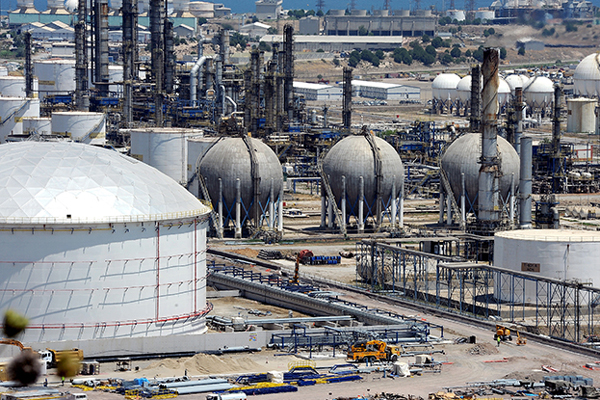
The petrochemical industry faces frequent and multi-source risks of flammable/toxic gas leaks throughout the entire process: upstream exploration and production, midstream oil and gas treatment, and downstream refining, storage, transportation, and loading. Routine leaks from flanges, valves, and potential hazards in hazardous chemical transportation can trigger explosions, mass poisoning casualties, or environmental pollution if undetected. Safety management covers personnel, equipment, environment, and management, demanding high reliability, real-time performance, and scenario adaptability of monitoring systems.
Based on core sensing technologies and full-scenario equipment portfolios from leading manufacturers, this solution accurately captures single-point leaks and uses a point-line-surface 3D monitoring system to cover risks from enclosed equipment to open tank farm boundaries. It integrates with existing DCS/PLC control systems and emergency management platforms to provide closed-loop protection: real-time monitoring, graded alarms, and linked response. It eliminates blind spots in traditional monitoring and helps enterprises shift from passive disaster relief to proactive risk prevention.
•Methane, propane, hydrogen, VOCs, etc., accumulate in low-lying areas and equipment gaps. Explosion occurs when concentration reaches 10%–25% of LEL and exposed to ignition sources; common in tank farms and loading stations.
H₂S, CO, SO₂, ammonia, etc., cause acute poisoning or long-term occupational hazards, mainly from desulfurization, catalytic cracking, and wastewater treatment.
High temperature, humidity, dust, and sulfur/silicon-containing exhaust accelerate sensor aging or poisoning failure; common in coking and sulfur recovery units.
Traditional single-point monitoring fails to cover pipeline welds, floating roof tank edges, loading arm interfaces, and unmanned areas in harsh weather, creating hidden dangers.
Explosion-proof fixed detectors for fixed points; portable devices for long pipeline inspection; PTZ laser imaging for visual monitoring of open areas; 7×24 uninterrupted coverage.
Compatible with multiple sensor types, strong anti-interference performance, long service life.
Graded alarms triggered by over-limit concentrations; Level 1 links sound-light alarms and ventilation; Level 2 activates emergency shut-off valves and sprinkler systems with fast response.
Meets international and domestic standards; integrates with DCS/PLC, FGS, and SIS for automatic emergency response.
Full-space and full-time risk coverage, greatly reducing accident rates.
Professional design minimizes false alarms, avoids production interruptions, and saves costs.
Rapid alarm response saves critical time for emergency disposal, cutting direct losses by over 60%.
Supports remote diagnosis and auto-calibration; sensor life up to 5 years; annual O&M cost reduced by 50%; enables predictive maintenance.